

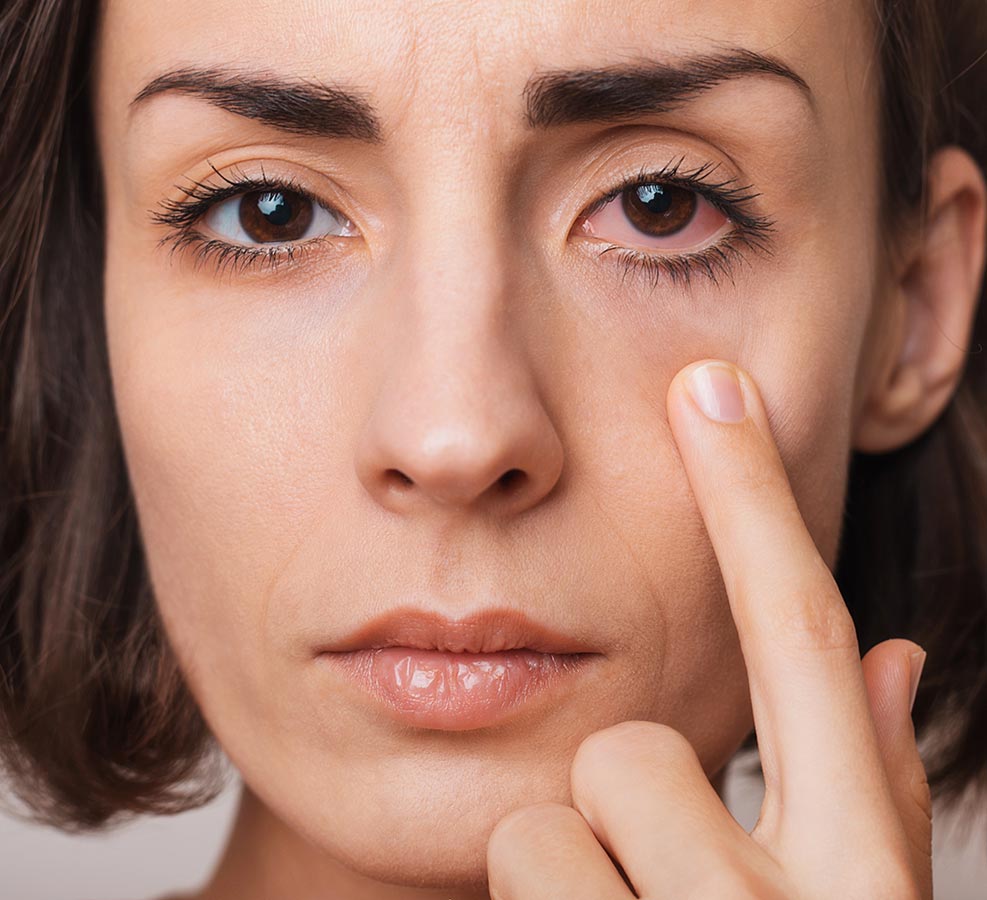
That Bump on Your Eyelid Won’t Go Away?
A sore, swollen bump on your eyelid can seem to appear overnight. Sometimes it’s red and tender. Other times, it doesn’t hurt at all—but weeks later, it’s still there.
Two of the most common causes are styes and chalazia.
While both are usually harmless, they aren’t exactly the same, and a persistent or recurring eyelid bump may need treatment.
At Holmdel Eye Center, Dr. Ahmed Abdelhady can evaluate eyelid bumps, swelling, and irritation to determine what’s causing the problem and help you find the right treatment.
Is It a Stye or a Chalazion?
Styes and chalazia can look very similar, especially when they first develop.
The biggest difference is usually what caused the bump and whether it hurts.
Stye
A stye—also called a hordeolum—is a red, tender bump that develops along or inside the eyelid.
It occurs when an oil gland or eyelash follicle becomes blocked and inflamed, sometimes due to a bacterial infection.
A stye may look similar to a pimple and can cause:
- A painful or tender eyelid bump
- Redness
- Swelling
- Tearing
- Eyelid sensitivity
- A small yellow or white point on the bump
Chalazion
A chalazion develops when one of the oil-producing glands within the eyelid becomes blocked.
Unlike a stye, a chalazion is usually not caused by an active infection and often becomes less painful after the initial inflammation settles.
It may feel like a firm lump beneath the skin of the eyelid.
A larger chalazion can sometimes press against the eye and temporarily blur or distort vision.
Not sure which one you have? You don’t need to figure it out yourself.
Why Do Styes and Chalazia Develop?
Your eyelids contain tiny glands that produce oils that help keep your tears from evaporating too quickly.
When one of these glands becomes clogged, oil can build up inside it and trigger inflammation.
Some people experience one isolated eyelid bump and never have another.
Others develop them repeatedly, which may be a sign that an underlying eyelid or oil gland condition needs attention.
Several factors can make eyelid bumps more likely, including:
- Blocked eyelid oil glands
- Blepharitis or chronic eyelid inflammation
- Touching or rubbing the eyes
- Sleeping in eye makeup
- Using old or contaminated eye makeup
- Certain skin conditions
- A history of previous styes or chalazia

Can I Treat a Stye or Chalazion at Home?
Many small styes and chalazia improve with conservative treatment.
One of the most helpful first steps is a warm compress.
Applying gentle warmth to the closed eyelid can help soften the material blocking the gland and encourage natural drainage.
Your doctor may recommend using warm compresses several times throughout the day along with gentle eyelid hygiene.
While the bump is healing:
- Keep your eyelids clean
- Avoid rubbing or squeezing the bump
- Avoid wearing eye makeup around the affected area
- Consider taking a break from contact lenses if your eye is irritated
- Wash your hands before touching the area
Most importantly:
Don’t pop or squeeze a stye or chalazion.
Trying to drain it yourself can increase inflammation and potentially spread infection.
When Should I See an Eye Doctor?
Not every eyelid bump requires medical treatment.
A persistent eyelid bump isn’t always a chalazion.
Having it examined allows Dr. Abdelhady to confirm the diagnosis and determine whether additional treatment is appropriate.
However, you should have it evaluated if:
- The bump isn’t improving
- It continues to grow
- Swelling becomes significant
- Your eyelid becomes increasingly painful
- Redness begins spreading around the eye
- The bump interferes with your vision
- You keep developing styes or chalazia
- The same bump repeatedly returns in the same location
- You’re simply not sure what it is
What If My Chalazion Won’t Go Away?
Some chalazia resolve gradually with warm compresses and time.
Others don’t.
If a chalazion remains despite conservative treatment, Dr. Abdelhady may recommend additional treatment.
Depending on the size, location, and appearance of the bump, treatment may include medication, an injection to reduce inflammation, or a minor procedure to drain or remove the blocked material.
The goal is to relieve the swelling while minimizing irritation to the eyelid.
Dr. Abdelhady can discuss which option is appropriate based on what he sees during your examination.
Can Eyelid Bumps Come Back?
Yes.
If you’re prone to clogged eyelid glands, you may experience repeated styes or chalazia.
Recurring bumps can sometimes be associated with blepharitis, a common condition that causes chronic inflammation along the edges of the eyelids.
Improving eyelid hygiene and treating underlying inflammation can help reduce the likelihood of future problems.
Dr. Abdelhady may recommend an ongoing eyelid care routine if recurring bumps have become a pattern.

Keeping Your Eyelids Healthy
A few simple habits can help keep the eyelids and oil glands healthier.
Remove eye makeup thoroughly before bed and replace older eye makeup regularly.
Avoid rubbing your eyes and always wash your hands before touching the eyelid area or handling contact lenses.
If you’re prone to clogged oil glands, your doctor may also recommend regular warm compresses or eyelid cleansing as part of your routine.
These small steps can be especially helpful for patients who have experienced multiple styes or chalazia.
When Eyelid Swelling Is More Than a Stye
A typical stye or chalazion is localized to a relatively small area of the eyelid.
More significant swelling deserves attention.
These symptoms can indicate a more serious infection or another eye condition that needs prompt medical evaluation.
Contact an eye care provider promptly if you develop:
- Rapidly increasing eyelid swelling
- Redness spreading beyond the eyelid
- Significant eye pain
- Fever along with eyelid swelling
- Pain when moving the eye
- Double vision
- Decreased vision
- An eye that appears pushed forward
Eyelid Bumps & Irritation FAQs
What’s the difference between a stye and a chalazion?
A stye is typically an inflamed and often painful bump associated with an eyelid gland or eyelash follicle. A chalazion is caused by a blocked oil gland and often becomes a firmer, less painful lump within the eyelid.
How long does a stye usually last?
Many styes begin improving within several days and resolve with conservative care. If a stye isn’t improving, becomes more painful, or causes significant swelling, it should be evaluated.
How long can a chalazion last?
A chalazion may take several weeks to fully resolve. Some persist longer and may require medical treatment if they don’t improve with warm compresses and eyelid care.
Should I pop a stye?
No. Avoid squeezing, popping, or attempting to drain a stye yourself. This can worsen inflammation or spread infection. Warm compresses are a safer way to encourage natural drainage.
Can a chalazion affect my vision?
A large chalazion can press against the cornea and temporarily change its shape, which may cause blurry or distorted vision.
Why do I keep getting styes?
Recurring styes may be related to chronic eyelid inflammation, blocked oil glands, blepharitis, or other eyelid conditions. An examination can help identify an underlying cause and determine whether preventive eyelid care may help.
Is every eyelid bump a stye or chalazion?
No. There are many different types of eyelid lesions. A bump that persists, changes appearance, bleeds, causes loss of eyelashes, or repeatedly returns in the same location should be examined rather than assumed to be a stye or chalazion.
Still Waiting for That Eyelid Bump to Disappear?
If you’ve been using warm compresses but the bump isn’t getting smaller—or it keeps coming back—it’s worth having someone take a closer look.
Dr. Abdelhady can determine whether you’re dealing with a stye, chalazion, or another eyelid condition and recommend the appropriate next step.