


Burning, Itching, Watering? Let’s Figure Out What’s Irritating Your Eyes.
Dry, irritated eyes can be surprisingly disruptive.
Maybe your eyes burn after a long day at the computer. They constantly feel gritty or tired. You find yourself reaching for eye drops throughout the day—or your eyes water so much that “dry eye” seems like the last thing that could be causing it.
Sometimes allergies are responsible. Sometimes it’s dry eye. And sometimes, it’s a combination of both.
At Holmdel Eye Center, Dr. Ahmed Abdelhady evaluates the underlying cause of irritated, uncomfortable eyes so treatment can focus on what’s actually causing your symptoms—not simply provide temporary relief.
What Does Dry Eye Feel Like?
Healthy tears do much more than make your eyes feel wet. They create a protective surface that keeps the eyes comfortable and helps maintain clear, stable vision.
When your eyes don’t produce enough tears—or your tears evaporate too quickly—the surface of the eye can become irritated and inflamed.
Symptoms may come and go or become a persistent part of your day.
And yes—dry eye can actually make your eyes water.
When the surface of the eye becomes irritated, your eyes may respond by producing a rush of watery tears. Unfortunately, these tears don’t always have the right composition to properly lubricate the eye, so the cycle of dryness and watering continues.
Dry eye symptoms can include:
- Burning or stinging
- A gritty or sandy feeling
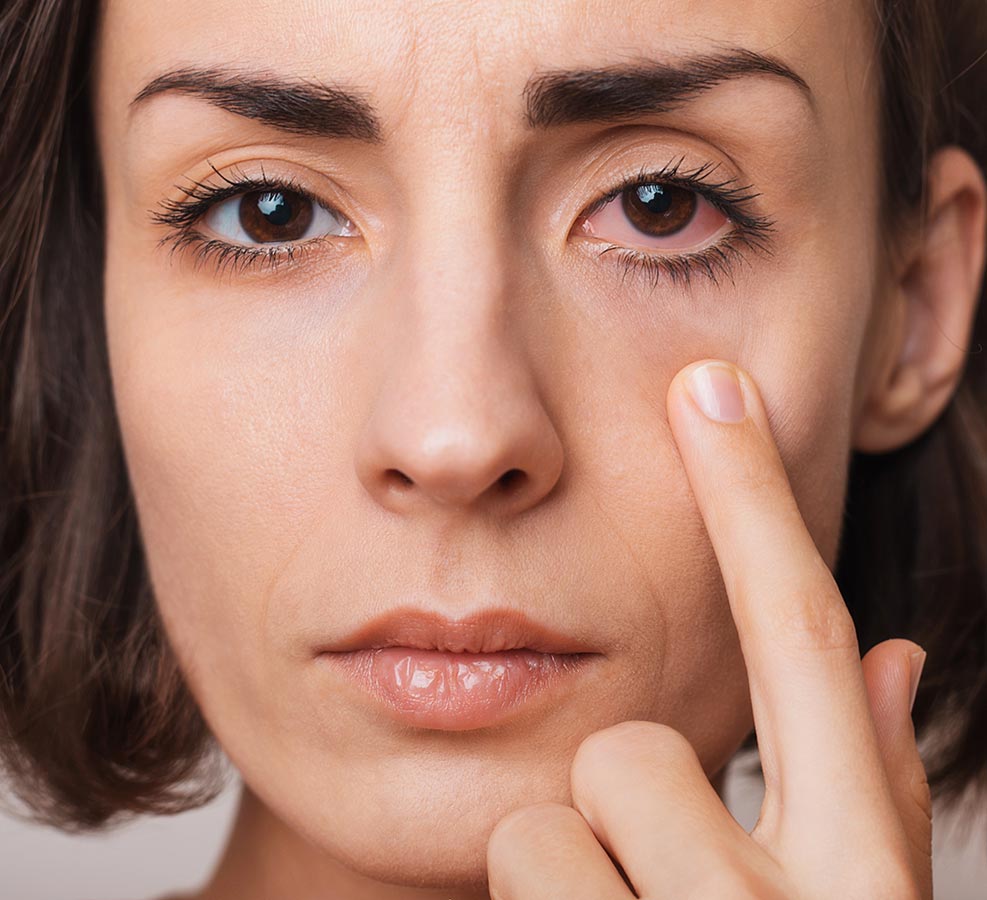
- Redness
- Watery eyes
- Tired or heavy-feeling eyes
- Sensitivity to light
- Blurry or fluctuating vision
- Difficulty wearing contact lenses
- Mucus around the eyes
- Feeling like something is stuck in your eye

Why Are My Eyes So Dry?
There isn’t one single cause of dry eye.
Your tear film contains multiple layers that work together to keep the surface of your eyes healthy and comfortable. Problems with any part of that system can contribute to dry eye.
Common factors include:
- Aging
- Hormonal changes
- Certain medications
- Long periods of computer or screen use
- Contact lens wear
- Dry or windy environments
- Heating and air conditioning
- Eyelid or oil gland problems
- Certain autoimmune or medical conditions
- Previous eye surgery
- Inflammation of the eye’s surface
For many patients, more than one factor is contributing.
That’s why simply trying another bottle of artificial tears doesn’t always solve the problem.
Dry Eye or Allergies?
Dry eye and allergic conjunctivitis can feel remarkably similar.
Both can cause redness, watering, burning, and irritation—but there are some differences.
Dry Eye
Dry eye commonly causes burning, grittiness, fluctuating vision, tired eyes, and a feeling that something is in the eye.
Symptoms may become worse after prolonged screen use, reading, driving, or spending time in dry environments.
Eye Allergies
Itching is one of the biggest clues that allergies may be involved.
Allergic conjunctivitis occurs when the eyes react to an allergen such as pollen, dust, mold, or pet dander.
Symptoms may include:
- Intense itching
- Redness
- Watery eyes
- Swollen or puffy eyelids
- Burning
- Sensitivity to light
Symptoms may be seasonal or occur throughout the year depending on the trigger.
What If I Have Both?
You can.
Allergies can irritate the surface of the eye and make existing dry eye symptoms worse. Some allergy medications may also contribute to dryness.
If you’ve been treating “allergies” or “dry eye” on your own without getting much relief, it may be because there’s more than one thing going on.
Why Over-the-Counter Eye Drops Aren’t Always Enough
Walking down the eye drop aisle can be overwhelming.
There are artificial tears, redness relievers, allergy drops, gels, ointments, preservative-free products, and dozens of different formulas.
And they’re not interchangeable.
Using the wrong type of drop may provide little relief—and some products aren’t intended for frequent or long-term use.
Instead of continually switching products, a dry eye evaluation can help determine why your eyes are irritated in the first place.
Once we understand the cause, treatment becomes much more targeted.