

Restoring Clarity to a Damaged or Cloudy Cornea
When the cornea is healthy, you probably never think about it. Light simply passes through its clear surface and into the eye.
But when the cornea becomes cloudy, swollen, scarred, or damaged, even everyday activities can become difficult. Vision may seem hazy or distorted, glare can make driving uncomfortable, and glasses may no longer provide the clarity they once did.
When other treatments are no longer enough, a corneal transplant may help restore clearer vision by replacing damaged corneal tissue with healthy donor tissue.
At Holmdel Eye Center, Dr. Ahmed Abdelhady provides advanced corneal care and can determine whether corneal transplantation is appropriate for your condition and your vision.
When Is a Corneal Transplant Needed?
A corneal transplant isn’t usually the first step in treating corneal disease.
Many conditions can initially be managed with monitoring, medications, specialized eye drops, or other treatments.
A transplant may become an option when the cornea becomes damaged enough that it can no longer remain clear or function properly.
The reason for your corneal disease helps determine not only whether you need a transplant, but also what type of transplant may be appropriate.
Conditions that may eventually require corneal transplantation include:
- Fuchs’ endothelial corneal dystrophy
- Persistent corneal swelling
- Corneal scarring
- Certain corneal infections or injuries
- Keratoconus and other conditions that significantly change the shape of the cornea
- Failure or rejection of a previous corneal transplant
Does a Corneal Transplant Replace the Entire Cornea?
Not always.
One of the biggest advances in corneal surgery is the ability to replace only the layer of the cornea that’s damaged in many patients.
The cornea is made up of several layers, and different diseases affect different parts of it.
If only one layer is unhealthy, replacing the entire cornea may not be necessary.
This allows Dr. Abdelhady to tailor the surgical approach to the specific part of your cornea that’s causing the problem.
Understanding Your Corneal Transplant Options
There are several types of corneal transplantation. The appropriate procedure depends on which layers of your cornea are affected.
Endothelial Keratoplasty
For conditions such as Fuchs’ dystrophy and certain types of corneal swelling, the problem occurs primarily in the innermost layer of the cornea, called the endothelium.
Instead of replacing the entire cornea, endothelial keratoplasty replaces the unhealthy inner tissue with healthy donor tissue.
Modern endothelial transplant techniques can offer significant advantages for appropriately selected patients, including smaller incisions and potentially faster visual recovery compared with a full-thickness transplant.
Partial-Thickness Corneal Transplant
When disease or damage affects specific layers of the cornea but healthy tissue remains, a partial-thickness transplant may be used to replace only the affected portion.
Preserving healthy corneal tissue whenever possible can provide advantages in healing and structural stability.
Full-Thickness Corneal Transplant
A full-thickness corneal transplant—also called penetrating keratoplasty—replaces the central portion of the cornea through its full thickness.
This approach may be necessary when disease, injury, or scarring involves multiple layers of the cornea.
Dr. Abdelhady will determine which approach offers the best option based on your diagnosis and the health of your cornea.

Where Does Donor Corneal Tissue Come From?
The healthy corneal tissue used for transplantation comes from a deceased human donor.
Donated corneal tissue is carefully evaluated and prepared by an eye bank before it is approved for transplantation.
Unlike many other types of organ transplantation, corneal transplantation generally does not require matching donor blood type.
Your surgical team handles the process of obtaining appropriate donor tissue, so you do not need to find a donor yourself.
For many patients, knowing that someone chose to donate their corneas so another person could see more clearly adds a particularly meaningful dimension to the procedure.
What Happens During Corneal Transplant Surgery?
The specifics of your surgery depend on the type of transplant you’re having.
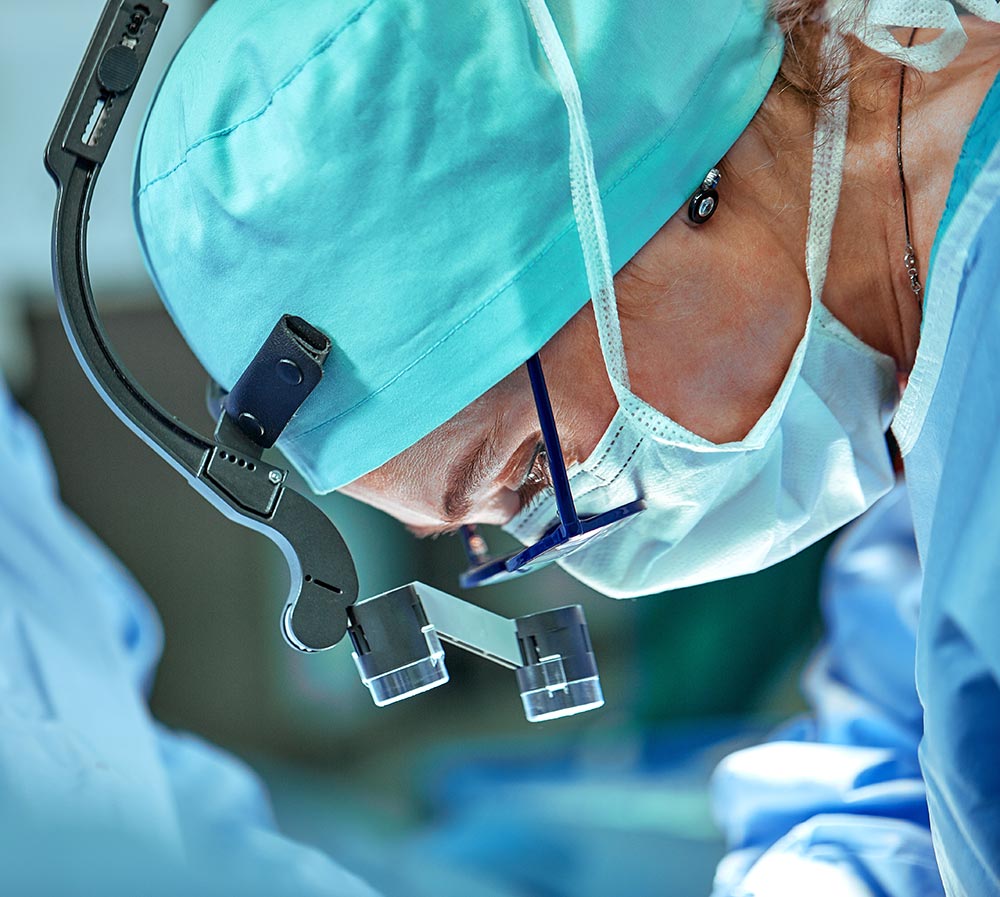
In general, Dr. Abdelhady carefully removes the damaged portion of your cornea and replaces it with healthy donor tissue.
For partial-thickness procedures, only the affected layers are replaced.
With a full-thickness transplant, a circular portion of the damaged cornea is removed and donor tissue is secured in its place.
Corneal transplantation is typically performed as an outpatient procedure, meaning you can return home the same day.
You’ll need someone to drive you home and should plan to take it easy as your eye begins to heal.
What Is Recovery Like?
Healing after a corneal transplant is gradual.
Your vision may be blurry initially and improve over time as the cornea heals and the donor tissue settles into place.
The speed of visual recovery depends on the type of transplant performed and the health of the rest of your eye.
During recovery, you’ll use prescribed eye drops to support healing and reduce the risk of inflammation and rejection.
You’ll also return for regular follow-up visits so Dr. Abdelhady can monitor your cornea.
Following your postoperative instructions and keeping your follow-up appointments are important parts of a successful recovery.
Can a Corneal Transplant Be Rejected?
Yes, rejection is possible because the transplanted tissue comes from a donor.
However, corneal transplantation has a strong history of success, and medications are used after surgery to reduce the risk of rejection.
Knowing the warning signs is important.
These symptoms don’t always mean rejection is occurring, but they should be evaluated quickly.
Early treatment can make an important difference if rejection does develop.
Contact your eye doctor promptly if you experience new:
- Redness
- Sensitivity to light
- Eye pain
- Decreased or cloudy vision

Corneal Transplants and Cataract Surgery
Corneal disease and cataracts can sometimes occur together.
This is particularly common in patients with Fuchs’ dystrophy.
If both the cornea and the natural lens inside the eye are affecting your vision, Dr. Abdelhady will evaluate which condition is contributing to your symptoms and determine the best way to approach treatment.
Depending on your individual eyes, cataract surgery and corneal transplantation may be performed separately or incorporated into a coordinated surgical plan.
The goal isn’t simply to treat one part of the eye.
It’s to create a plan that considers how the cornea, lens, and rest of the eye work together to provide clear vision.

Advanced Corneal Care, Personalized to Your Eyes
Being told you may need a corneal transplant can sound overwhelming.
But a transplant doesn’t always mean replacing your entire cornea, and advances in corneal surgery allow treatment to be increasingly targeted to the specific tissue that’s causing your vision problems.
Dr. Ahmed Abdelhady will carefully evaluate your cornea, explain what has changed, and help you understand which surgical options may be appropriate.
You’ll know why a procedure is being recommended, what it involves, and what you can expect afterward.
Corneal Transplant FAQs
Will I need a full corneal transplant?
Not necessarily. Many corneal conditions affect only certain layers of the cornea. When appropriate, a partial-thickness transplant can replace the damaged tissue while leaving healthy portions of your cornea intact.
Where does the donor cornea come from?
Corneal tissue comes from deceased donors who chose to donate their eyes or corneas after death. Eye banks carefully screen and prepare donated tissue before it is used for transplantation.
Can I see immediately after a corneal transplant?
Your vision will typically be blurry immediately after surgery. Improvement occurs gradually as your eye heals, and the recovery timeline varies depending on the type of transplant performed and your overall eye health.
How long does a corneal transplant last?
Many corneal transplants can remain clear and functional for many years. How long a transplant lasts depends on several factors, including the reason for transplantation, the type of procedure, the health of the eye, and whether complications such as rejection occur.
Will I still need glasses after a corneal transplant?
Possibly. The purpose of a corneal transplant is to restore a healthier, clearer cornea, but you may still have nearsightedness, farsightedness, or astigmatism afterward. Glasses or other vision correction may be needed once your eye has healed.
What are the signs of corneal transplant rejection?
New redness, light sensitivity, eye pain, or decreased vision can be warning signs of rejection. Contact your eye doctor promptly if you experience these symptoms after a transplant.
Is corneal transplant rejection treatable?
It often can be, particularly when identified early. That’s why it’s important to recognize possible symptoms and contact your eye doctor promptly rather than waiting to see whether they improve on their own.
When Your Cornea Needs More Than Medication
If corneal swelling, cloudiness, or scarring is interfering with your vision and other treatments are no longer providing enough improvement, it may be time to explore surgical options.
Dr. Abdelhady can determine whether a corneal transplant is appropriate and help you understand which approach makes the most sense for your eyes.